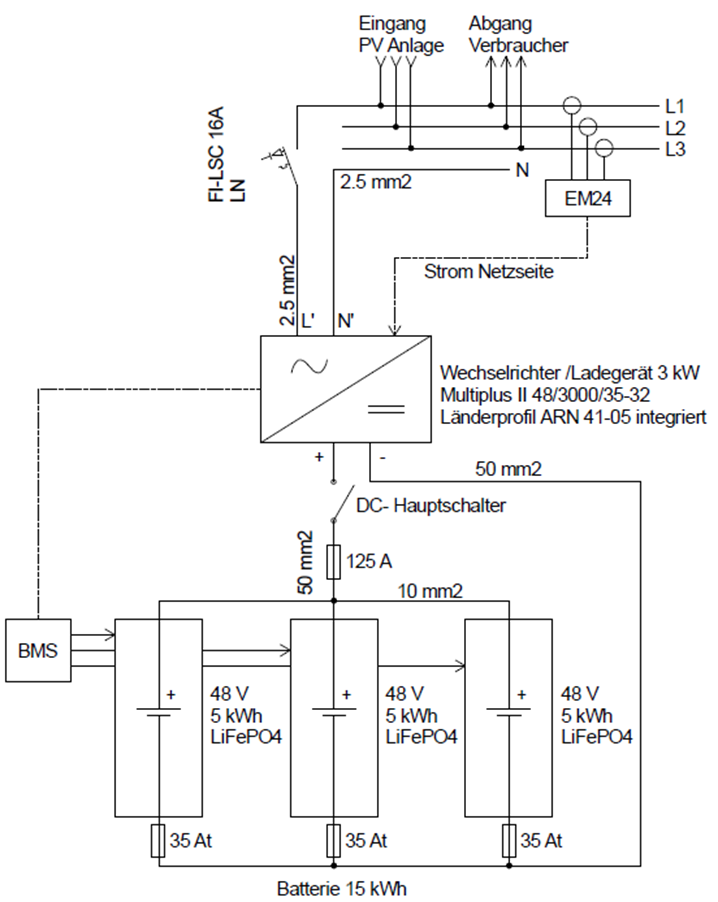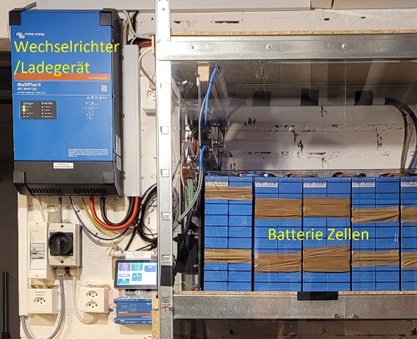
The Second Life Home Storage is an innovative demonstration project that shows how used batteries from electric vehicles can be reused in a meaningful and sustainable way. Instead of being recycled after their use in the vehicle, the batteries are given a second life as a stationary energy storage system for solar power generated by the home’s own photovoltaic system.
The project originated from the replacement of the batteries in the electric vehicle Stromboli II in 2022. After around twelve years of operation, the vehicle’s range was no longer optimal for everyday use. However, the lithium iron phosphate cells still retained a substantial residual capacity and are ideally suited for use in a home storage system, where they are exposed to far lower loads than in mobile operation.
The Second Life Home Storage system is part of a comprehensive, integrated energy system. A 6.6 kWp photovoltaic installation on the roof of the house generates significantly more energy than is required by the household and for charging Stromboli II. Without storage, a large proportion of this energy must be fed into the public grid, while at other times electricity still has to be drawn from the grid. This temporal imbalance between energy production and consumption is one of the key challenges of the energy transition – and this is precisely where the Second Life Home Storage system comes into play.
The home storage system stores surplus solar energy that would otherwise be fed into the grid and makes it available again at a later time. This significantly increases on-site consumption of solar energy and greatly reduces the amount of electricity drawn from the public grid. One of the project’s goals was that less than 5% of the total electricity demand of the house – including the electric vehicle – should have to be supplied from the grid.
From a technical perspective, the Second Life Home Storage system is based on the former battery cells from Stromboli II, with a remaining capacity of approximately 15 kWh. The system operates using a safe 48-volt architecture, which allows the use of widely available, proven components while also offering safety advantages. At the heart of the system is a bidirectional inverter/charger that intelligently manages the energy flow between the photovoltaic system, the home storage system, the household and the grid.
A high-performance Battery Management System (BMS) monitors each individual battery cell with regard to voltage, temperature, the overall state of charge of the storage system and other key parameters. The BMS ensures that the storage system is charged and discharged only within safe and optimal operating limits. This guarantees a high level of operational safety and a long service life for the Second Life batteries.
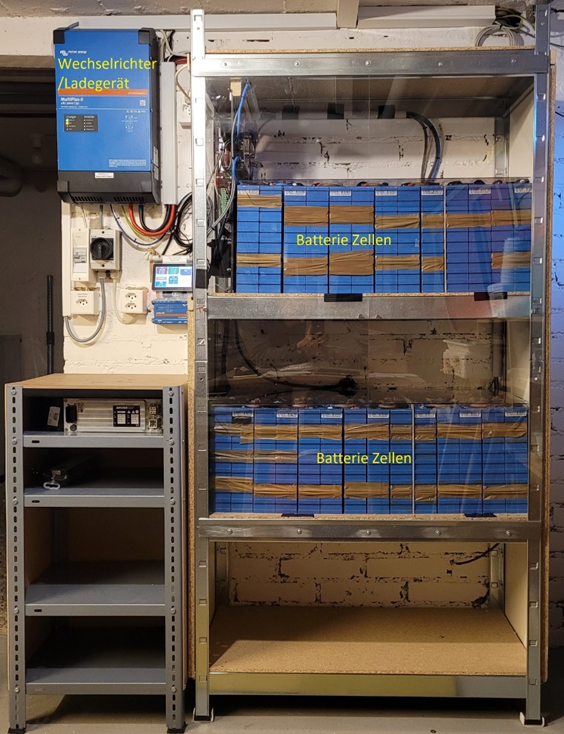
All relevant components are fully networked. A central communication system records all data relating to solar production, household energy consumption, the state of charge of the storage system, and the energy flows between storage, household and grid. This data can be visualised, evaluated and analysed locally or remotely. The data acquisition enables continuous system monitoring and provides valuable insights for further optimisation of energy management.
The Second Life Home Storage system is not only a technical solution but also a contribution to the circular economy. It demonstrates in a practical way that batteries from electric vehicles can continue to be used effectively for many years after their automotive service life. This significantly improves the batteries’ CO₂ balance, conserves new resources and further reduces the environmental footprint of the entire energy system.
With this project, what has been discussed in specialist circles for several years under the term “Second Life” is put into practice: the intelligent reuse of batteries from electric vehicles as stationary energy storage systems. The Second Life Home Storage Eisenring shows that this concept is not only theoretically sound, but also works reliably in practice – as a sustainable, efficient and future-proof solution for the energy transition.
Thomas Kuster of Ingenieurbüro Kuster contributed significantly to the successful implementation of this project.
Victron Remote Monitoring APP
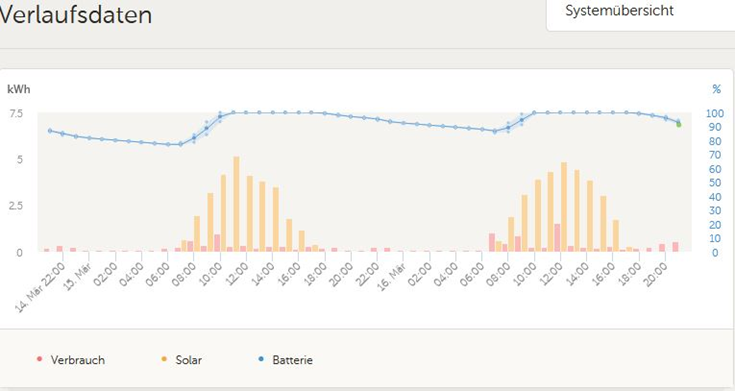
Principle diagram of second-life home battery storage system