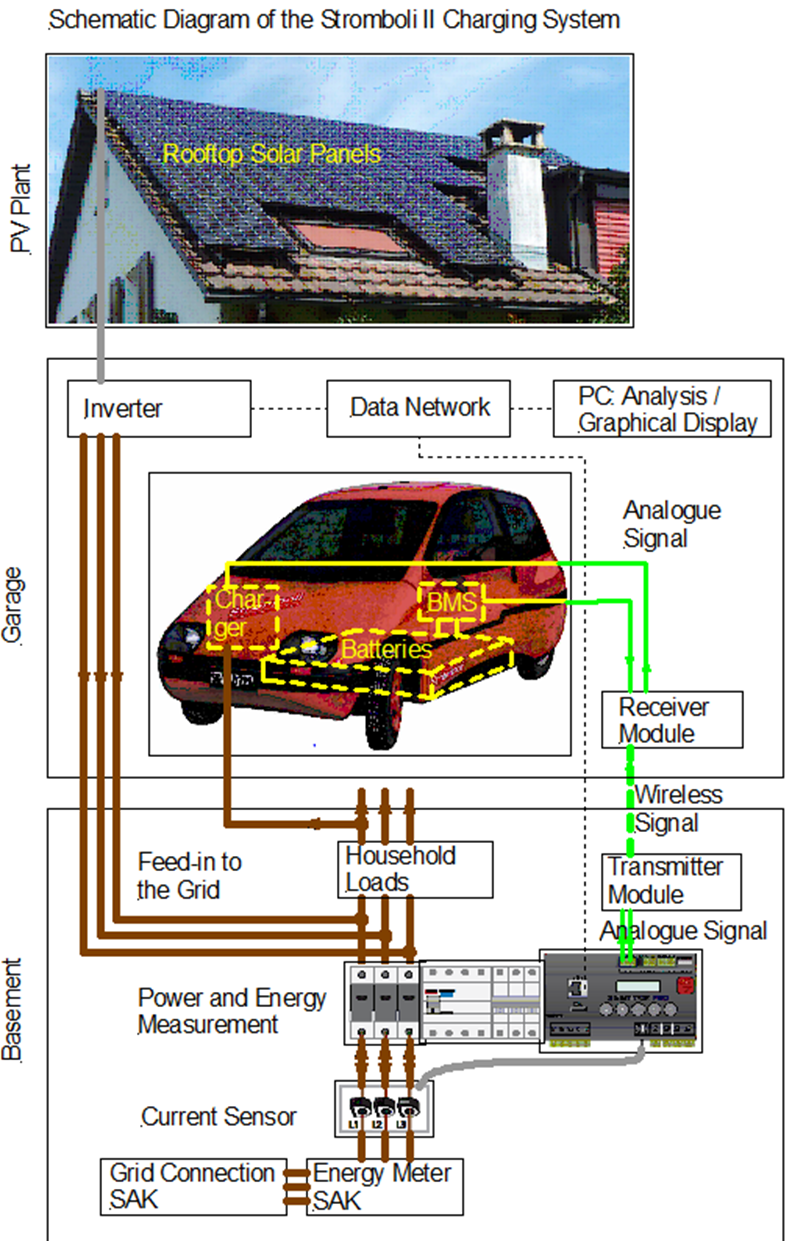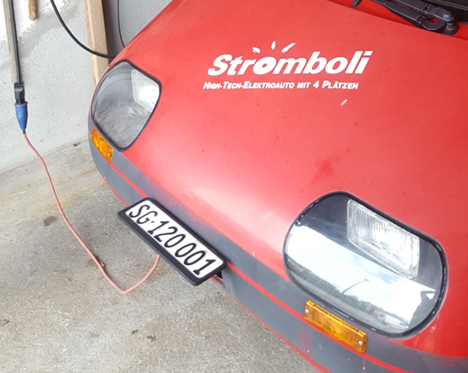
The charging system of the electric vehicle Stromboli II is an integral part of a comprehensive and intelligent energy system designed to maximise the use of solar power. The objective of the system is to charge Stromboli II exclusively with surplus energy from the on-site photovoltaic (PV) installation, thereby maximising self-consumption and reducing electricity drawn from the grid to a minimum.
The system is based on a 6.6 kWp photovoltaic installation, commissioned in 2017. The solar energy produced is primarily used within the household; any surplus power would normally be fed into the grid of the St. Gallisch-Appenzellische Kraftwerke (SAK). This surplus energy is instead deliberately utilised by the charging system to charge Stromboli II.
Power and energy monitoring is carried out using a Smartfox Pro metering system, which continuously records how much power is currently being fed into the grid or drawn from it. In addition, the system integrates production data from the PV inverter, providing precise, real-time information on solar generation, self-consumption and the overall energy flow within the house.
As soon as surplus solar power becomes available, this information is transmitted to the charging system via a dedicated, purpose-built signalling interface. A custom-developed transmitter and receiver module are used, both precisely matched to the overall system. In parallel, the Battery Management System (BMS) of Stromboli II supplies a signal indicating the maximum charging power that the vehicle batteries can currently accept. The charging system processes both inputs and always forwards the lower of the two values to the charger. This ensures that only available solar energy is used and that the batteries are always operated within their optimal charging parameters.
The electric vehicle Stromboli II, originally commissioned in 1996, is a high-tech lightweight vehicle with an exceptionally low energy consumption of less than 10 kWh per 100 km. This is achieved through its low vehicle weight, efficient drivetrain and a consistently efficiency-oriented overall design. Energy is stored in a lithium iron phosphate battery system with a capacity of 22 kWh, in operation since 2010 (expanded to 33 kWh from 2022).
The installed BMS monitors each individual battery cell with regard to voltage, temperature, internal resistance and the overall state of charge, along with many other parameters. Driving and charging cycles can be recorded and can be analysed in detail. This close integration of vehicle, charging system and energy management is a key factor in the system’s high efficiency and operational safety.
All relevant components are interconnected via a networked monitoring system. Data can be visualised on a PC or smartphone, ranging from solar production and household energy consumption to detailed battery data from Stromboli II. This comprehensive data acquisition, evaluation and analysis enables complete transparency of energy flows and provides valuable insights for the ongoing optimisation of the system.
Thanks to the intelligent charging system, self-consumption of the PV installation is significantly increased. An additional 600 to 800 kWh of solar energy per year is used directly to charge Stromboli II. Overall, self-consumption increases by more than 60%, while electricity drawn from the grid is reduced by over 45%. The Stromboli II charging system clearly demonstrates how intelligent control, in-house development and a consistent systems approach can realise sustainable, efficient and future-oriented electric mobility.
Thomas Kuster of Ingenieurbüro Kuster contributed significantly to the successful implementation of this project.
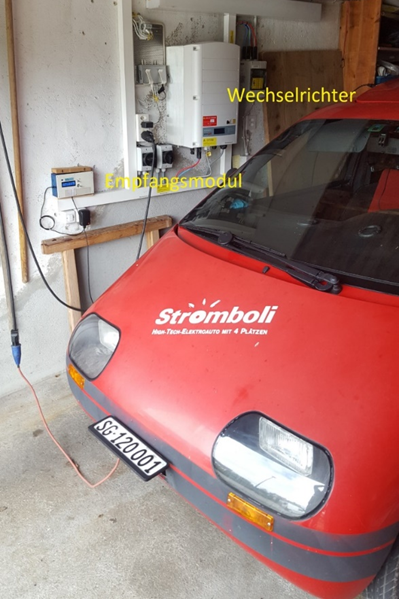 |
 |
| Electric Vehicle Stromboli II, Solar Inverter, Receiver Module |
Smartfox (Power and Energy Measurement), Transmitter Module, Energy Meter SAK |