Anyone travelling through the streets of Kathmandu for the first time will quickly notice an unusual yet defining means of transport: small, three-wheeled electric vehicles quietly making their way through the dense city traffic. These vehicles are known as Safa Tempos, and they are among the earliest large-scale e-mobility projects in the world.
What are Safa Tempos?
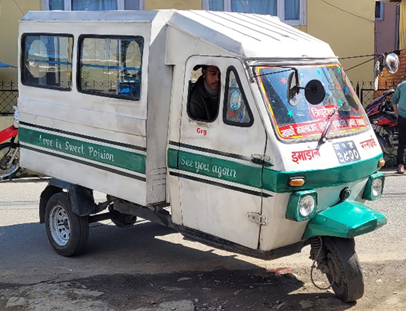
Safa Tempos are electrically powered three-wheeled vehicles that have been operating in the public transport system of Nepal’s capital since the mid-1990s. Today, more than 650 vehicles run on fixed routes, transporting thousands of passengers every day and forming a vital pillar of local public transport. The name “Safa” means “clean” in Nepali – a reference to their emission-free operation and their contribution to improved air quality.
How did this pioneering project come about?
In the 1990s, Kathmandu was facing a severe air pollution crisis. The introduction of Safa Tempos marked a turning point: for the first time, electric mobility was implemented on a large scale as an alternative to petrol-powered small vehicles. Swiss partners played an important role in the technical development of the project. With their support, the vehicles were modernised, made more reliable and secured for long-term operation.
Positive Impacts on the Environment, Society and the Economy
- Environment: Clean transport for a heavily polluted city
Kathmandu regularly ranks among the cities with the highest levels of air pollution in South Asia. Safa Tempos make a noticeable contribution to reducing this burden:
- Emission-free operation – no exhaust fumes or particulate matter
- Low energy consumption, powered entirely by Nepal’s hydropower
- Reduced noise levels in urban traffic
- A significant contribution to improving air quality
- Social Impact: Mobility creates opportunities
Safa Tempos are not only a means of transport, but also a social project:
- Around 3,000 people earn a stable income through their operation
- Many female drivers – the so-called “Lady Drivers” – find independent and respected employment
- The drivers’ community is well connected and self-organised, supporting one another in matters of safety, maintenance and training
- Local employment reduces the need for labour migration abroad
- Economy: A local transport system with wide-ranging impact
Safa Tempos are also an economic success:
- Around 140,000 passengers use this affordable means of transport every day
- Local manufacturing creates jobs and keeps technical know-how within the country
- Vehicles can be financed locally, providing an important foundation for sustainable growth
- They are more cost-effective than imported alternatives and therefore strengthen the domestic economy
Conclusion
Safa Tempos clearly demonstrate how electric mobility can function in a developing country – environmentally sound, socially beneficial and economically viable. They serve as an example of how technological innovation, local value creation and international cooperation can shape a sustainable transport system.
As a long-standing partner, Eisenring Engineering continues to support the further development of this sustainable success story.
Market Launch of Lithium Batteries for Electric Vehicles in Nepal